
Low Water Pressure in Your Condo Building: What It Actually Means
Low water pressure affecting multiple floors in a condo building is almost never a fixture problem. If tenants on three, four, or six floors are calling at the same time, the issue is inside the building’s shared plumbing infrastructure and it has usually been developing for years before anyone noticed.
This post explains the two most common causes, what gets missed when property managers try to troubleshoot it floor by floor, and what a proper diagnosis actually looks like.
Why Multiple Floors Losing Pressure at the Same Time Matters
A single suite losing pressure usually means a problem with that unit’s shut-off valve, fixture, or supply line. When the same complaint comes from multiple floors on the same riser, the problem is upstream of all of them.
The two most common culprits in Toronto condo buildings are a failing pressure reducing valve and a corroded galvanized riser. In buildings from the 1960s and 1970s, both issues often exist at the same time.
The Pressure Reducing Valve
Every condo building connected to the Toronto municipal water supply has at least one pressure reducing valve, commonly called a PRV. Its job is to take incoming municipal water pressure, which regularly exceeds 100 PSI, and reduce it to a safe level for the building’s internal plumbing, typically between 50 and 80 PSI.
When a PRV starts to fail it does not always fail completely. It degrades. Pressure regulation becomes inconsistent. Some floors get adequate pressure, others get significantly less, and the gap between them widens over time as the valve deteriorates further.
Most PRV valves last 15 to 20 years with no maintenance. In buildings where the valve has never been inspected or replaced since original installation, failure is not a question of if. It already happened.
A PRV replacement is a straightforward repair. The valve is isolated, drained, removed, and replaced with a new unit calibrated to the correct pressure setting for the building. In most cases it is a same-day job.
The Galvanized Steel Riser
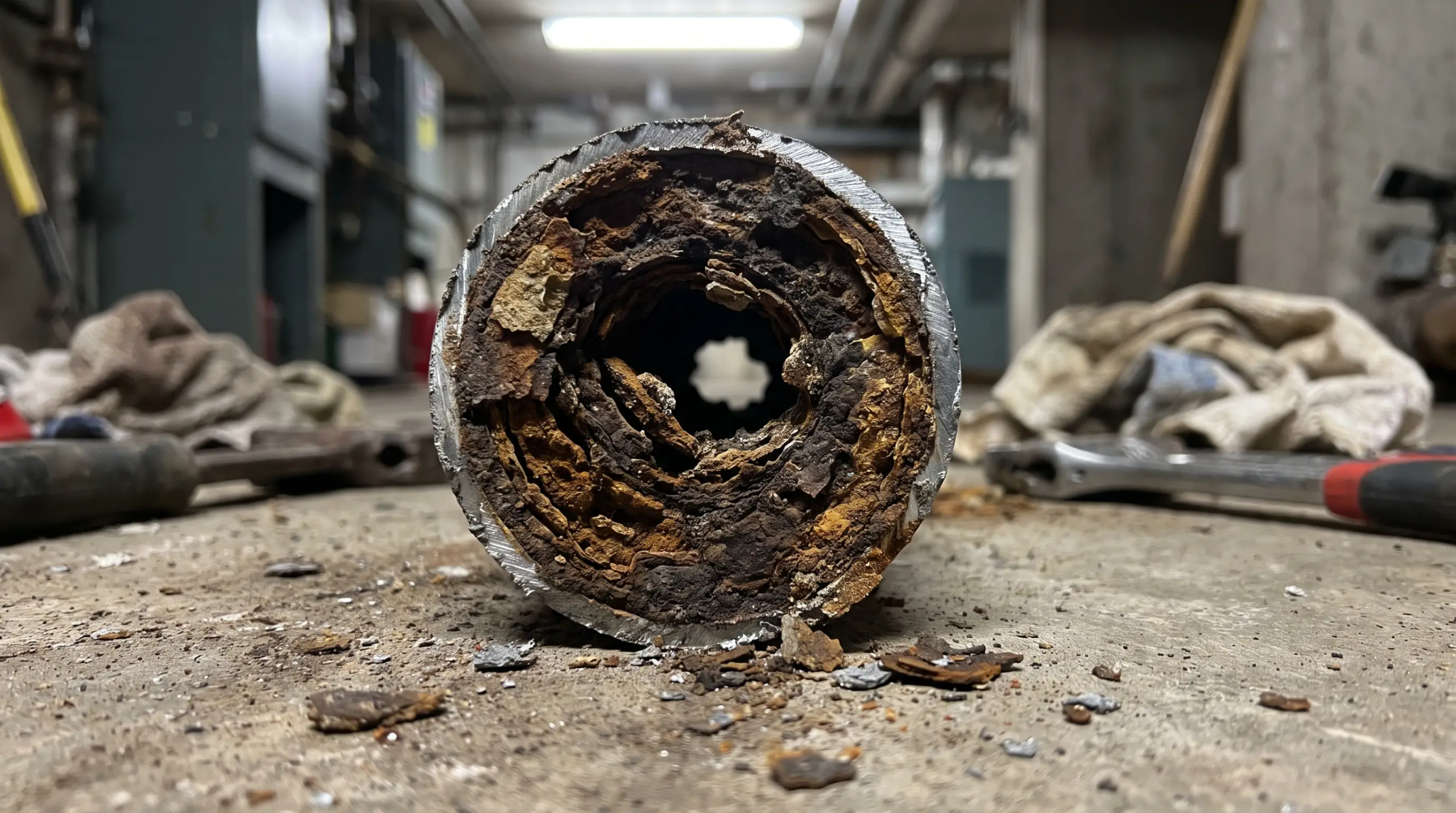
In buildings constructed before 1980, the hot and cold water risers are commonly made of galvanized steel. Galvanized steel corrodes from the inside. Over decades, rust and mineral scale accumulate on the interior pipe walls, gradually narrowing the available opening for water to pass through.
A pipe that started with a full inch of interior diameter can narrow to a quarter of that after 40 years of Toronto water running through it. At that point the physics are simple: less space means less flow means less pressure at every fixture connected to that riser.
The narrowing happens slowly enough that no single event triggers a complaint. Pressure drops a little one year, a little more the next. By the time tenants are calling, the riser has been restricting flow for a long time.
Unlike a PRV, a corroded riser cannot be cleaned or repaired. It needs to be replaced. In an occupied condo building that means coordinating floor-by-floor access with property management, scheduling suite entry across multiple units, and completing the work in sections to minimize disruption to tenants. It is a larger project than a PRV swap, but the result is full pressure restored building-wide.
Why Replacing Fixtures Does Not Fix This
One of the most common mistakes in condo buildings with pressure complaints is addressing the issue at the fixture level replacing showerheads, cleaning aerators, swapping valves inside individual suites.
These repairs fix the symptom in one unit for a short time. They do not touch the PRV or the riser, which means pressure continues to drop across every suite connected to the same line. Each round of fixture repairs adds cost without solving the problem, and the complaints keep coming.
A proper diagnosis starts at the building level. Testing pressure at the PRV, inspecting the riser condition, and identifying which floors are affected gives a clear picture of where the restriction actually is before any work begins.
What a Proper Diagnosis Looks Like
A licensed plumber diagnosing building-wide pressure loss will typically:
Check the PRV first. Testing incoming pressure against outgoing pressure at the valve shows immediately whether the PRV is regulating correctly or failing.
Pull a riser section if the PRV tests fine. A short section of riser removed from the system shows the interior condition directly. If the pipe walls are coated with rust scale and the opening is significantly narrowed, riser replacement is the next conversation.
Identify the affected floors and isolate whether the problem is on one riser or across multiple. In larger buildings with multiple risers, pressure loss on a subset of floors points to the specific riser that needs attention.
Document everything for property management records and insurance purposes before, during, and after the repair.
How Long This Has Been Building
In most of the condo buildings we work in across Toronto and the GTA, pressure complaints that reach the property manager level have been developing for two to three years before anyone calls a plumber. Tenants adjust. They take showers earlier or later to avoid peak demand. They stop mentioning it until the pressure gets bad enough that they cannot ignore it.
By the time a property manager is fielding calls from six floors at once, the riser or the PRV has been degrading for a long time. The repair is the same either way but earlier intervention means less tenant disruption and lower overall cost.
Frequently Asked Questions
Why does pressure drop specifically in the morning?
Peak demand hours, typically 7am to 9am, put maximum load on the building’s plumbing system. A PRV or riser that is borderline functional handles low-demand periods adequately but fails to maintain adequate pressure when the whole building is using water simultaneously. Morning pressure complaints that resolve by mid-day almost always point to infrastructure that is failing under load.
Can a corroded riser affect hot water and cold water separately?
Yes. Hot and cold risers are separate pipe systems. It is common for one to show more corrosion than the other depending on the water chemistry, the pipe age, and the specific route each riser takes through the building. A building with cold water pressure complaints but adequate hot water pressure has a problem on the cold riser specifically.
How long does riser replacement take in an occupied building?
Most riser replacements in occupied buildings are completed floor by floor, with each floor requiring a planned shutoff window of four to eight hours. The full project timeline depends on the number of floors, suite access coordination, and building staff availability. We work directly with property managers to schedule the work with minimal disruption to tenants.
Does low water pressure indicate a leak somewhere in the building?
Sudden pressure loss across a building can indicate a burst pipe or a significant leak. Gradual pressure loss over months or years points to riser corrosion or PRV failure rather than an active leak. If pressure dropped suddenly rather than gradually, a licensed plumber should inspect for an active leak before assuming infrastructure failure.
Next Steps
If your condo building has recurring pressure complaints from multiple floors, the fix is not another round of fixture replacements. It starts with a proper diagnosis at the building infrastructure level.
PlumbingOnSite serves condo buildings across Toronto, North York, Etobicoke, Scarborough, Mississauga, Brampton, Vaughan, Markham, Oakville, Burlington, Pickering, Whitby, Oshawa, and surrounding GTA communities. Licensed technicians available 24/7.
Call (647) 621-2439 or visit plumbingonsite.ca.