
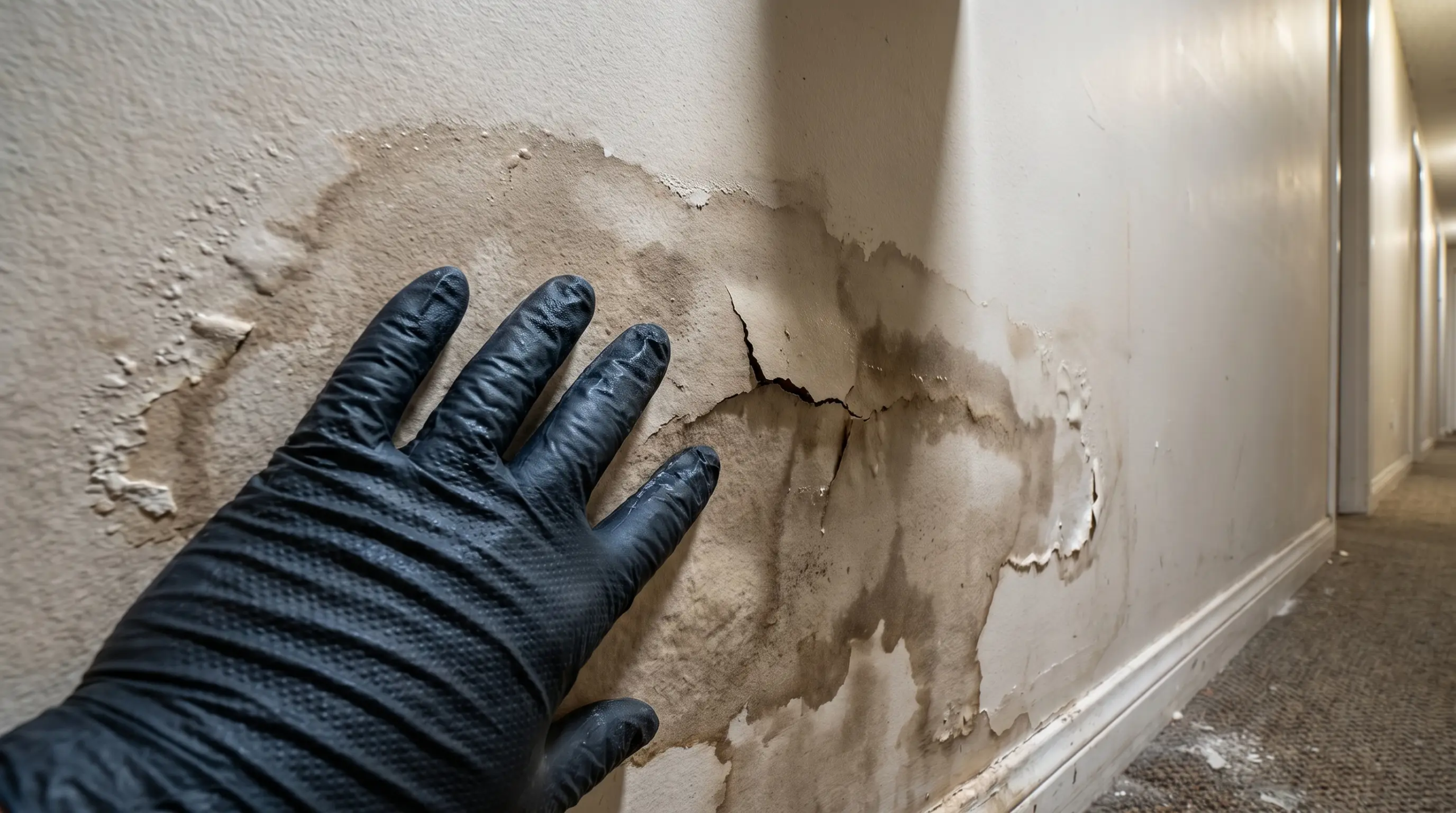
A plumbing leak inside a condo suite is one of the most common disputes between unit owners and condo corporations in Ontario. One owner ends up with a damaged bathroom floor. The suite below has water stains across the ceiling. Nobody agrees on who pays for what. In June 2026 a Toronto condo owner faced over $260,000 in legal costs after a plumbing dispute with their condo corporation escalated through multiple court proceedings. The repair itself was not the expensive part. The disagreement about who was responsible for it was.
This post explains how Ontario law draws the line between unit owner responsibility and condo corporation responsibility for plumbing, and what property managers need to know before the next leak call comes in.
The Basic Rule Under the Ontario Condominium Act
Ontario’s Condominium Act divides a condo building into two categories: units and common elements. The unit owner is responsible for maintaining and repairing their unit. The condo corporation is responsible for maintaining and repairing the common elements.
The problem is that plumbing does not respect those boundaries neatly. Pipes run through walls, floors, and ceilings that belong to neither the unit owner nor the corporation exclusively. A single pipe can cross from common element territory into a unit and back again within a few meters.
The starting point for any dispute is the building’s declaration. The declaration defines exactly where the unit boundary is for that specific building. In some buildings the unit starts at the paint on the wall. In others it includes the drywall. The boundary is not the same in every condo building in Toronto and assuming it is the same as another building is how disputes start.
What the Unit Owner Is Responsible For
As a general rule, the unit owner is responsible for:
Plumbing fixtures inside the suite. Toilets, faucets, showerheads, and supply lines running from the shutoff valve to the fixture are typically inside the unit boundary and the owner’s responsibility to maintain and repair.
In-suite supply lines. The flexible supply lines connecting fixtures to the shutoff valve are usually the owner’s responsibility. These fail more often than people expect and a slow drip from an aging supply line under a sink can cause significant water damage to the suite below before anyone notices.
Drains inside the suite. The drain line from the fixture to the point where it connects to the shared stack is typically the unit owner’s responsibility.
Damage caused by the owner’s negligence. If an owner’s failure to maintain in-suite plumbing causes damage to a neighboring unit or common areas, the owner’s condo insurance is typically responsible for that damage.
What the Condo Corporation Is Responsible For
The condo corporation is responsible for the common elements, which in most Toronto condo buildings includes:
The main water risers. The vertical pipes running through the building that supply hot and cold water to all suites on each floor are common elements in most buildings. If a riser fails and causes damage to multiple suites, the corporation handles the repair and the resulting damage claims.
The shared drain stacks. The vertical drain pipes that carry waste from all suites down to the municipal connection are common elements. A blockage or failure in the shared stack is the corporation’s responsibility, not the individual unit owner’s.
Shutoff valves for the building. The building shutoff valves and isolation valves in the mechanical room are common elements maintained by the corporation.
Plumbing in common areas. Any plumbing in hallways, parking garages, mechanical rooms, amenity areas, and exterior spaces is the corporation’s responsibility.
Where It Gets Complicated
The grey area is where most disputes happen. Three situations come up repeatedly in Toronto condo buildings:
A leak originates in one unit and damages another. If a toilet supply line fails in Suite 1204 and water damages the ceiling of Suite 1104, the question is whether the leak was caused by the unit owner’s negligence or by a common element failure. If the supply line was the owner’s responsibility and had not been maintained, the owner’s condo insurance typically covers the damage below. If the failure was in the shared stack or a common element pipe, the corporation’s insurance covers it.
The source of the leak is not clear. Water travels. A leak that appears in the ceiling of Suite 1104 may have originated two floors up or in a pipe running horizontally inside the wall cavity. Identifying the exact source requires a licensed plumber with leak detection equipment. Whoever authorizes the investigation — owner or corporation — depends on where the suspected source is located.
The declaration is ambiguous. Older Toronto condo buildings built in the 1970s and 1980s sometimes have declarations that do not clearly address modern plumbing repair scenarios. When the declaration is silent on who is responsible for a specific pipe, the board and the unit owner have to negotiate a position, which is exactly the situation that generates legal disputes.
What Property Managers Should Do Before a Leak Dispute Escalates
Know the building’s declaration before the call comes in. Every property manager should have a clear understanding of where the unit boundary is in their building and which plumbing components are common elements versus unit responsibility. This is not something to figure out at 11pm when water is coming through a ceiling.
Get a licensed plumber to identify the source before assigning responsibility. The moment a leak is reported, the priority is stopping the water and identifying where it originated. A plumber’s written report documenting the source, the affected components, and the probable cause is the most important document in any subsequent insurance or legal dispute.
Document everything. Photos before, during, and after every plumbing repair. Written scope of work. Materials used. The repair timeline. If a dispute goes to the Condominium Authority Tribunal or beyond, documentation is the difference between a resolved dispute and a $260,000 legal bill.
Frequently Asked Questions
If a pipe bursts inside my condo wall, who pays for the repair?
It depends on whether the pipe is a common element or a unit component. In most Toronto condo buildings, the pipes inside wall cavities that are part of the shared riser system are common elements and the corporation’s responsibility. A pipe inside the wall that serves only your suite may be your responsibility. Check your building’s declaration and have a licensed plumber identify which pipe failed before assuming responsibility either way.
My upstairs neighbor’s toilet overflowed and damaged my ceiling. Who pays?
If the overflow was caused by the neighbor’s negligence, their condo insurance typically covers damage to your suite. If the overflow was caused by a blockage in the shared stack, the condo corporation’s insurance typically applies. A plumber’s report identifying the source is the starting point for any insurance claim.
Can the condo corporation force me to repair plumbing inside my unit?
Yes. Under the Ontario Condominium Act, if an owner fails to maintain their unit and that failure causes or threatens damage to common elements or other units, the corporation can carry out the repair and charge the cost back to the owner. This is a last resort but it is used when owners repeatedly defer in-suite maintenance that creates risk for neighboring units.
What is the Condominium Authority Tribunal and when does it get involved?
The Condominium Authority Tribunal is an Ontario adjudicative body that handles disputes between condo owners and corporations. Plumbing disputes over responsibility, repair costs, and damage claims are among the most common issues it handles. Most disputes are resolved before reaching the Tribunal when there is clear documentation and a licensed plumber’s report identifying the source.
Next Steps
If your condo building has a plumbing dispute in progress or you want a licensed plumber’s report to support an insurance or legal position, PlumbingOnSite provides documentation for property management, insurance adjusters, and legal proceedings across Toronto and the GTA.
Call (647) 621-2439 or visit plumbingonsite.ca.